The bottom line
What this product gets right — concisely
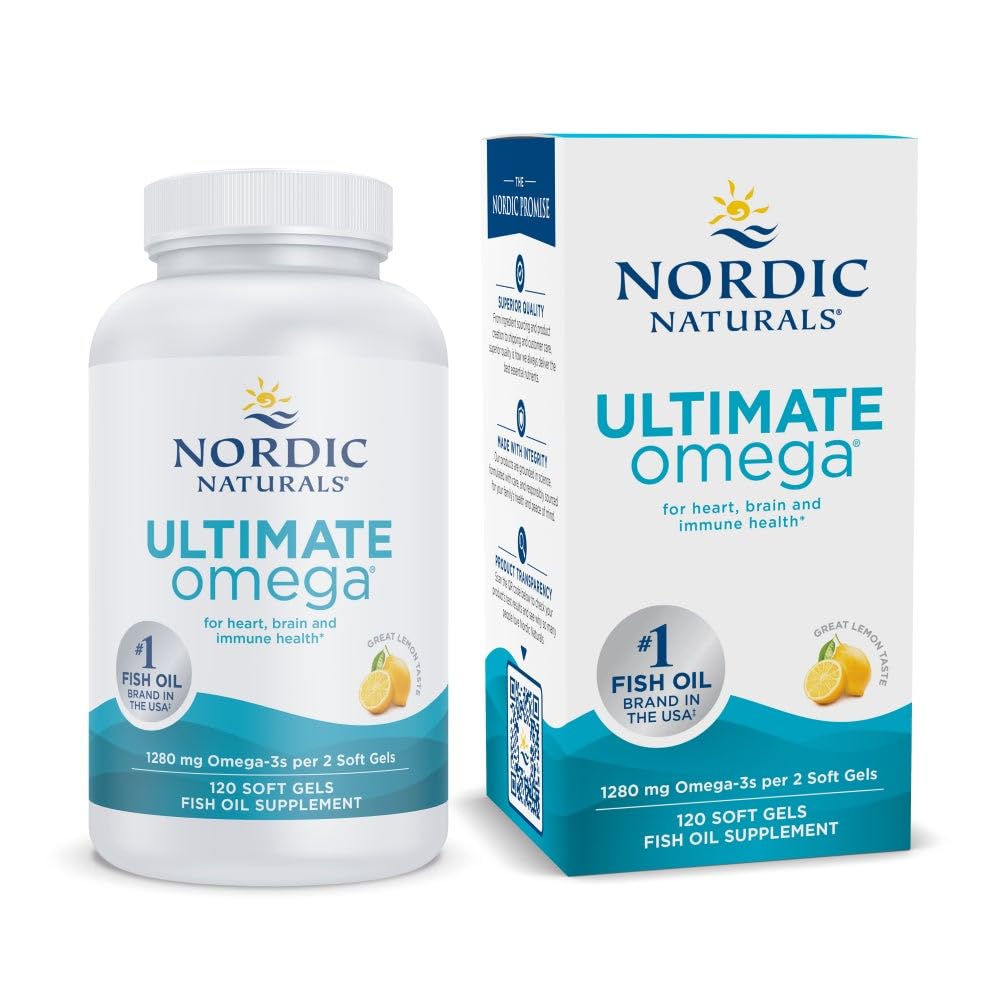
Correct EPA:DHA ratio (roughly 1.4:1, consistent with most cardiovascular RCTs). Re-esterified triglyceride form for maximum bioavailability. Wild-caught anchovies and sardines — small pelagic fish with low bioaccumulation risk. Oxygen-free manufacturing throughout. GOED-compliant purity standards. COA available on request for any batch. Friend of the Sea sustainable sourcing certification. Clean excipient list: no synthetic antioxidants beyond d-alpha tocopherol and rosemary extract.
How EPA and DHA work — and why molecular form changes how much reaches you
EPA (eicosapentaenoic acid, 20:5n-3) and DHA (docosahexaenoic acid, 22:6n-3) are long-chain omega-3 polyunsaturated fatty acids. Unlike their short-chain precursor ALA, they do not require enzymatic conversion — they are biologically active in the forms taken up from the gut.
Pathway 1 — EPA and the eicosanoid cascade
EPA competes with arachidonic acid (AA, 20:4n-6) for the same cyclooxygenase (COX-1/COX-2) and lipoxygenase (LOX-5/LOX-12) enzymes that generate inflammatory eicosanoids. AA-derived eicosanoids (prostaglandin E2, leukotriene B4, thromboxane A2) are pro-inflammatory and pro-thrombotic. EPA-derived equivalents (prostaglandin E3, leukotriene B5) are two to four orders of magnitude less potent biologically. Increasing dietary EPA shifts the membrane phospholipid ratio, blunting the AA-driven signal without eliminating it. RCT
Additionally, EPA is a precursor for E-series resolvins and protectins — lipid mediators that actively resolve inflammation rather than merely suppressing it. This is a qualitatively different mechanism from NSAIDs, which block eicosanoid synthesis entirely. In vitro / animal
Pathway 2 — DHA and membrane structure
DHA is the most structurally important fatty acid in neuronal cell membranes, comprising approximately 97% of the brain's omega-3 content and 93% of retinal omega-3s. Its six double bonds confer exceptional membrane fluidity — critical for ion channel gating speed, receptor conformational change, and synaptic vesicle fusion. DHA also generates D-series resolvins and neuroprotectin D1, which regulate microglial activation and neuroinflammatory cascades. Observational / mechanistic
Why triglyceride form matters
Most concentrated fish oils on the market — including many Indian brands — are produced and sold as ethyl esters (EE). Ethyl esters are formed when a synthetic ethanol molecule bonds to the fatty acid chain during molecular distillation. This is a processing shortcut: EE form is cheaper to concentrate and purify. The problem is that ethyl esters are a non-physiological fat structure not found in nature. The gut hydrolyses them at approximately 68% the efficiency of triglycerides, requiring pancreatic lipase-driven cleavage of the ethanol bond first.
Bioavailability comparison — TG vs rTG vs EE forms (Dyerberg et al., 2010)
What this means practically: if you take the same label dose of an EE-form fish oil vs an rTG-form fish oil, you absorb approximately 70% as much EPA+DHA from the EE version. The 650 mg EPA + 450 mg DHA on Nordic Naturals' label therefore delivers meaningfully more to circulation than the same stated dose from an EE product — roughly equivalent to ~890 mg EPA + 615 mg DHA from a standard EE softgel.
What's in the serving — and how it maps to clinical evidence
| Component | Per 2-softgel serving | Clinically studied range | Assessment |
|---|---|---|---|
| EPA (eicosapentaenoic acid) | 650 mg | 360–1,800 mg/day in CVD RCTs | Within range · Cardioprotective threshold met |
| DHA (docosahexaenoic acid) | 450 mg | 250–500 mg/day for neurological support | Within range · Upper end of brain-health dosing |
| Total omega-3s | 1,280 mg | 500 mg+ for AHA cardioprotective; 1,000–4,000 mg for triglyceride lowering | Meets AHA general population threshold; below prescription-grade triglyceride-lowering dose |
| Molecular form | Re-esterified triglyceride (rTG) | rTG ≥ natural TG > EE in bioavailability studies | Best-in-class form · ~70% advantage over EE |
| Fish source | Anchovies and sardines (purified deep sea) | Small pelagic fish preferred — low mercury bioaccumulation | Correct species choice — anchovy/sardine are lowest-risk marine sources |
| Antioxidant system | d-alpha tocopherol (natural Vit E) + rosemary extract | Natural antioxidants preferred over TBHQ/BHT in high-quality oils | Clean — no synthetic antioxidants |
| Softgel shell | Gelatin, glycerin, water, natural lemon flavour | Standard — bovine gelatin (not suitable for vegetarians) | Noted: not vegan/vegetarian-compatible |
| Lemon flavour | Natural lemon flavour (softgel + oil) | — | Functionally reduces fishy oxidation perception; does not mask rancidity odour entirely |
Dose context: AHA, ESC, and ICMR recommendations
The American Heart Association recommends ≥500 mg EPA+DHA/day for general cardiovascular support, and 1,000 mg/day for patients with established coronary artery disease. The European Society of Cardiology echoes this. India's ICMR-NIN 2020 guidelines recommend 250 mg/day DHA for general adults. Nordic Naturals Ultimate Omega at 2 softgels/day delivers 1,100 mg EPA+DHA — meeting all three thresholds in a single serving. At 4 softgels/day (the "ultimate support" suggestion on the label), it reaches the lower boundary of triglyceride-lowering doses studied in clinical trials.
Two things to watch: oil freshness in India's supply chain, and the import cost reality
1. Oil freshness — the universal fish oil problem
Nordic Naturals' manufacturing uses an oxygen-free process from extraction through encapsulation — nitrogen blanketing at each transfer step, TOTOX measurement throughout. This is industry-best practice, and it results in genuinely fresh oil at the point of production. The problem for Indian consumers is what happens after the product leaves the Norwegian or US manufacturing facility.
Products listed on Amazon India by third-party importers — which is the typical channel for Nordic Naturals in India — pass through ambient-temperature sea freight (14–28 days), Indian customs warehousing, Amazon fulfilment centres, and last-mile delivery. During Indian summer (March–June), ambient temperatures in logistics hubs in Delhi, Mumbai, and Hyderabad regularly exceed 42°C. Fish oil oxidises exponentially above 25°C. There is no cold-chain standard enforced for supplement imports in India under current FSSAI guidelines.
How to verify freshness on receipt
Cut open one softgel when the bottle arrives. Nordic Naturals' fresh oil has a clean, mild lemon scent. If you smell rancid fish, stale cooking oil, or sharp pungency — the oil has oxidised in transit. Oxidised fish oil is not merely ineffective; aldehyde byproducts of lipid peroxidation are biologically active and potentially pro-inflammatory. Do not consume a rancid batch — request a replacement or refund. Check the expiry date: avoid stock with fewer than 12 months remaining, as TOTOX rises with age even at correct storage temperature.
2. The import premium — honest cost analysis
Nordic Naturals Ultimate Omega retails on Amazon India at approximately ₹4,000–4,500 for 90 softgels (45 servings), which works out to roughly ₹90–100 per serving, or approximately ₹8.50 per 100 mg of combined EPA+DHA. For comparison:
| Product | EPA+DHA / serving | Form | Pack price | ₹ / 100 mg EPA+DHA | 3rd-party tested? |
|---|---|---|---|---|---|
| Nordic Naturals Ultimate Omega (this product) | 1,100 mg | rTG (best) | ₹~4,299 / 90ct | ₹8.50 | GOED-compliant COA |
| Carbamide Forte Omega-3 Triple Strength | 600 mg | EE (likely) | ₹999 / 60ct | ₹1.67 | Partial COA |
| HK Vitals Fish Oil 1000 mg | 300 mg | Form not disclosed | ₹699 / 60ct | ₹2.33 | No COA published |
| Nakpro Fish Oil 1000 mg | 300 mg | Form not disclosed | ₹799 / 60ct | ₹2.66 | No COA published |
| Now Foods Ultra Omega-3 (imported) | 500 mg | EE form | ₹1,499 / 90ct | ₹3.00 | IFOS certified |
The 5× cost premium over domestic fish oils is the product of import duties, shipping, distributor margins, and the genuine premium of rTG manufacturing. The clinical question is whether this cost gap translates to a meaningfully different health outcome for most users. For standard cardiovascular and general wellbeing supplementation at 1,000 mg EPA+DHA/day: probably not — if the domestic alternative is adequately dosed and not rancid. The rTG form advantage is real and measurable in absorption trials, but EPA and DHA from verified EE-form fish oil still produce the same serum EPA/DHA elevation over 8–12 weeks. The difference is how many capsules you need to take to reach the same effective tissue dose.
Where the Nordic Naturals premium becomes more justifiable: therapeutic dosing (2,000–4,000 mg EPA+DHA/day for triglyceride management), prenatal DHA supplementation where absolute DHA status matters, and for users who have previously experienced GI intolerance (fish burps, reflux) with EE fish oils — the triglyceride form and lemon flavour combination significantly reduces this.
What the clinical record shows for the dose this product delivers
Cardiovascular endpoints
The JELIS trial (Yokoyama et al., 2007; n=18,645) found a 19% reduction in major coronary events with 1,800 mg/day pure EPA added to statin therapy in Japanese hypercholesterolaemic patients. RCT The REDUCE-IT trial (Bhatt et al., 2019; n=8,179) found a 25% relative risk reduction in major adverse cardiovascular events with 4,000 mg/day icosapentaenoic acid (prescription-strength EPA). RCT Note: the REDUCE-IT mineral oil placebo controversy — some researchers argue the placebo (mineral oil) may have raised LDL in the control group, inflating the apparent benefit. This remains an active methodological debate in cardiology.
At Nordic Naturals Ultimate Omega's standard dose (2 softgels = 1,100 mg EPA+DHA), the product falls within the maintenance/prevention range endorsed by the AHA for general population cardiovascular support, but below the therapeutic doses used in the major outcome trials. This is not a criticism of the product — it is a calibration note. For triglyceride management, the evidence-based dose is 3,000–4,000 mg/day EPA+DHA; you would need 5–6 softgels of this product daily.
Brain and cognitive function
The MIDAS trial (Yurko-Mauro et al., 2010; n=485) found statistically significant improvements in episodic memory in healthy older adults supplemented with 900 mg/day DHA for 24 weeks vs placebo. RCT Nordic Naturals Ultimate Omega provides 450 mg DHA/serving — at 2 servings/day, it would match the MIDAS dose. At the standard single serving, it delivers half. Most mood-related RCTs (EPA for MDD, anxiety) use EPA doses of 1,000–2,000 mg/day; this product's single-serving EPA of 650 mg is at the lower boundary of demonstrated effect for mood endpoints.
Eye health and retinal function
DHA is essential for photoreceptor membrane structure and rhodopsin function. The AREDS2 trial added EPA+DHA to the original AREDS antioxidant formula — the combined supplement did not significantly further reduce AMD progression over the antioxidant formula alone. RCT However, observational data consistently links higher habitual omega-3 intake with lower risk of AMD onset. Observational For dry eye specifically, 3–4 softgels/day of this product (or a higher-potency EPA formulation) has more consistent RCT support than a single daily serving. RCT
Joint and inflammatory markers
A 2018 Cochrane review (Goldberg & Katz) of omega-3 supplementation in rheumatoid arthritis found statistically significant reductions in joint pain intensity and morning stiffness with EPA+DHA doses of 1,800–2,700 mg/day. The standard 2-softgel serving here provides 1,100 mg — meaningful, but dose-response relationships in joint inflammation RCTs suggest better results at higher doses.
GOED-compliant — not IFOS. What the distinction means in practice.
| Parameter | Standard used | Status | Notes |
|---|---|---|---|
| EPA+DHA potency accuracy | ±10% of label claim | Verified per batch | Third-party tested; GOED minimum is ±10% |
| TOTOX (total oxidation) | TOTOX <26 (GOED); <10 excellent | Meets/exceeds European Pharmacopoeia | Oxygen-free manufacturing throughout — PV consistently low at production |
| Peroxide value (PV) | <5 meq/kg (GOED) | Passes at production | Post-import PV not independently verified for India market |
| Heavy metals (Hg, Pb, Cd, As) | GOED / WHO limits | No detectable dioxin-like PCBs to 1.0 ppt (GOED limit 3.0 ppt) | Anchovy/sardine sourcing significantly reduces heavy metal risk vs large predatory fish |
| Dioxins and PCBs | GOED / WHO TEQ | Passes — below detection at 1.0 ppt | Independently verified per brand's public quality documentation |
| Banned substances (sports) | Informed Sport / NSF Sport | Not enrolled | Relevant only for WADA-tested athletes; fish oil is low-risk category |
| IFOS certification | International Fish Oil Standards | Not enrolled | Nordic Naturals uses own GOED-aligned COA programme instead |
| Per-batch COA publicly accessible | Best practice | On request only | Must call or email Nordic Naturals with lot number — not posted online by default |
The lack of IFOS enrollment is the only material gap in Nordic Naturals' quality infrastructure. IFOS publishes batch-level test reports publicly, indexed by lot number, at no cost to the consumer. Nordic Naturals offers equivalent testing data but only on direct request to their quality assurance line. For a consumer in India buying through a third-party Amazon seller, making that call is unrealistic. The practical consequence: you cannot independently verify the freshness of the specific bottle you received. For domestic buyers ordering through Nordic Naturals' authorised distributor with intact cold-chain handling, this distinction matters less.
Who actually needs supplemental EPA+DHA in India — and at what dose
The Indian dietary context for omega-3
India has a complex omega-3 landscape. Coastal populations — Tamil Nadu, Kerala, West Bengal, Goa, Odisha, coastal Andhra Pradesh — consume hilsa, mackerel, sardine, and anchovies regularly. In these populations, supplemental EPA+DHA is often unnecessary unless prescribed for a specific indication. A single serving of fresh hilsa (rohu ilish) provides approximately 1,200–1,500 mg EPA+DHA — more than this supplement's daily dose.
The populations most likely to genuinely benefit from this supplement: strict vegetarians and vegans (for whom algae oil remains the only truly appropriate choice), inland urban professionals cooking in refined seed oils with minimal fish intake, pregnant women who avoid or minimise fish (DHA is critical for foetal neurodevelopment — 200 mg DHA/day is the European EFSA recommendation for pregnancy), patients with diagnosed hypertriglyceridaemia (in whom 3–4g/day EPA+DHA is used clinically), and individuals with elevated inflammatory markers or post-cardiac event risk who have been directed to omega-3 supplementation by a physician.
Note on vegetarians and vegans
Nordic Naturals Ultimate Omega is derived from fish and contains bovine gelatin in the softgel shell. It is unsuitable for vegetarians and vegans. The correct alternative for this population is algae-derived EPA+DHA — see our omega-3 ingredient entry for a full comparison of algae oil options available in India.
Nordic Naturals against three key alternatives at different price points
See the full Omega-3 category rankings → including domestic and imported options across all price tiers. Also compare: Himalayan Organics Plant Omega 3-6-9 (ALA-only — what not to buy).
Buy / don't buy
Buy if
- You want the highest-confidence formulation available in India — best dose, best form, substantiated purity — and budget is not the primary constraint
- You have a clinical indication requiring confirmed EPA+DHA delivery (post-cardiac event, hypertriglyceridaemia, dry eye disease prescribed by an ophthalmologist)
- You have previously experienced GI side effects (fishy burps, acid reflux, nausea) with ethyl ester fish oils — the rTG form and lemon flavour largely eliminates this
- You are supplementing at 3–4 softgels/day for therapeutic endpoints — rTG form advantage compounds at higher doses
- You are buying for a pregnant woman who does not consume fish — DHA status matters significantly in the third trimester
Consider an alternative if
- You are vegetarian or vegan — this product contains fish oil and bovine gelatin; algae oil is the correct choice
- You are supplementing at the standard 1,000 mg EPA+DHA/day maintenance dose and budget matters — a verified EE-form domestic product achieves the same serum outcomes at 20% of the cost
- You are buying through an unverified Amazon third-party seller — oxidation risk during India import logistics cannot be ruled out without a COA for the specific lot
- You consume 2–3 portions of fatty fish per week already (hilsa, mackerel, sardine, tuna) — supplementation is likely unnecessary
Storage instructions
Store in a cool, dry location — refrigerator is best, especially after opening. Keep away from direct sunlight. Do not leave in a car or near a stove. The lemon flavour masks early-stage oxidation odour — do not rely on smell alone. Check the lot-specific COA if freshness is a concern: call Nordic Naturals at +1 800 662 2544 with the lot number printed on the bottle base. Consume within 3 months of opening.
Three things Nordic Naturals should do for the Indian market specifically
Publish batch COAs online, indexed by lot number
Currently, obtaining a COA requires phoning or emailing Nordic Naturals directly with a lot number. This is unrealistic for the vast majority of Indian consumers buying through Amazon. Competitor Now Foods posts batch-level IFOS test results publicly at ifos.com — searchable by lot number, freely accessible. Nordic Naturals should either enrol in IFOS or build a public COA portal. The data clearly supports the product. Hiding it behind a phone call serves no one except consumers who never check.
Establish an authorised Indian cold-chain distribution agreement
Nordic Naturals' own quality standards require oxygen-free manufacturing and controlled storage. The brand has no publicly known cold-chain distribution agreement in India. Most Indian stock moves through ambient-temperature freight and unrefrigerated Amazon fulfilment. The brand should appoint an authorised importer with documented cold-chain handling from port to consumer — and make that information visible on their India product pages. Pharmavite (owner of Nature Made) and several ayurvedic brands have managed this for temperature-sensitive products.
Launch a fish-gelatin or halal-certified variant for the Indian market
Nordic Naturals already produces a fish-gelatin softgel version for pescatarians. Muslim consumers in India — a significant supplement-buying demographic — cannot consume bovine gelatin without halal certification. The current India-market stock uses standard bovine gelatin with no halal certification. Making the fish-gelatin variant the default for India distribution, or pursuing halal certification for the existing formulation, would open a large underserved market segment that currently defaults to domestic brands by necessity.
References & citations
- Dyerberg J et al. (2010). Bioavailability of marine n-3 fatty acid formulations. Prostaglandins Leukot Essent Fatty Acids, 83(3):137–141. RCT — rTG vs TG vs EE bioavailability crossover.
- Bhatt DL et al. (2019). REDUCE-IT: Cardiovascular risk and icosapentaenoic acid. N Engl J Med, 380(1):11–22. RCT
- Yokoyama M et al. (2007). JELIS: EPA and major coronary events in hypercholesterolaemia. Lancet, 369(9567):1090–98. RCT
- Yurko-Mauro K et al. (2010). MIDAS trial: DHA and episodic memory in healthy older adults. Alzheimers Dement, 6(6):456–64. RCT
- Goldberg RJ, Katz J. (2007). Meta-analysis of analgesic effects of omega-3 polyunsaturated fatty acid supplementation in inflammatory joint pain. Pain, 129(1–2):210–23.
- Harris WS, von Schacky C. (2004). The Omega-3 Index: a new risk factor for death from coronary heart disease? Prev Med, 39(1):212–20. Observational
- GOED Voluntary Monograph (2019). Quality standards for omega-3 concentrates. Global Organization for EPA and DHA Omega-3.
- ICMR-NIN Expert Group (2020). Nutrient Requirements for Indians — 2020. National Institute of Nutrition, Hyderabad.
- Sacks FM et al. (2017). Dietary fats and cardiovascular disease: AHA Presidential Advisory. Circulation, 136(3):e1–e23.
- Calder PC. (2020). Eicosanoids and the modulation of inflammation. Biochem Soc Trans, 48(4):1–12. In vitro / mechanistic
Not medical advice. This review is educational and reflects our reading of published research. Omega-3 supplementation at doses above 3g/day may interact with anticoagulant therapy (warfarin, aspirin, clopidogrel) — consult a physician before supplementing if you are on blood thinners, scheduled for surgery, or managing a cardiovascular condition.