The bottom line
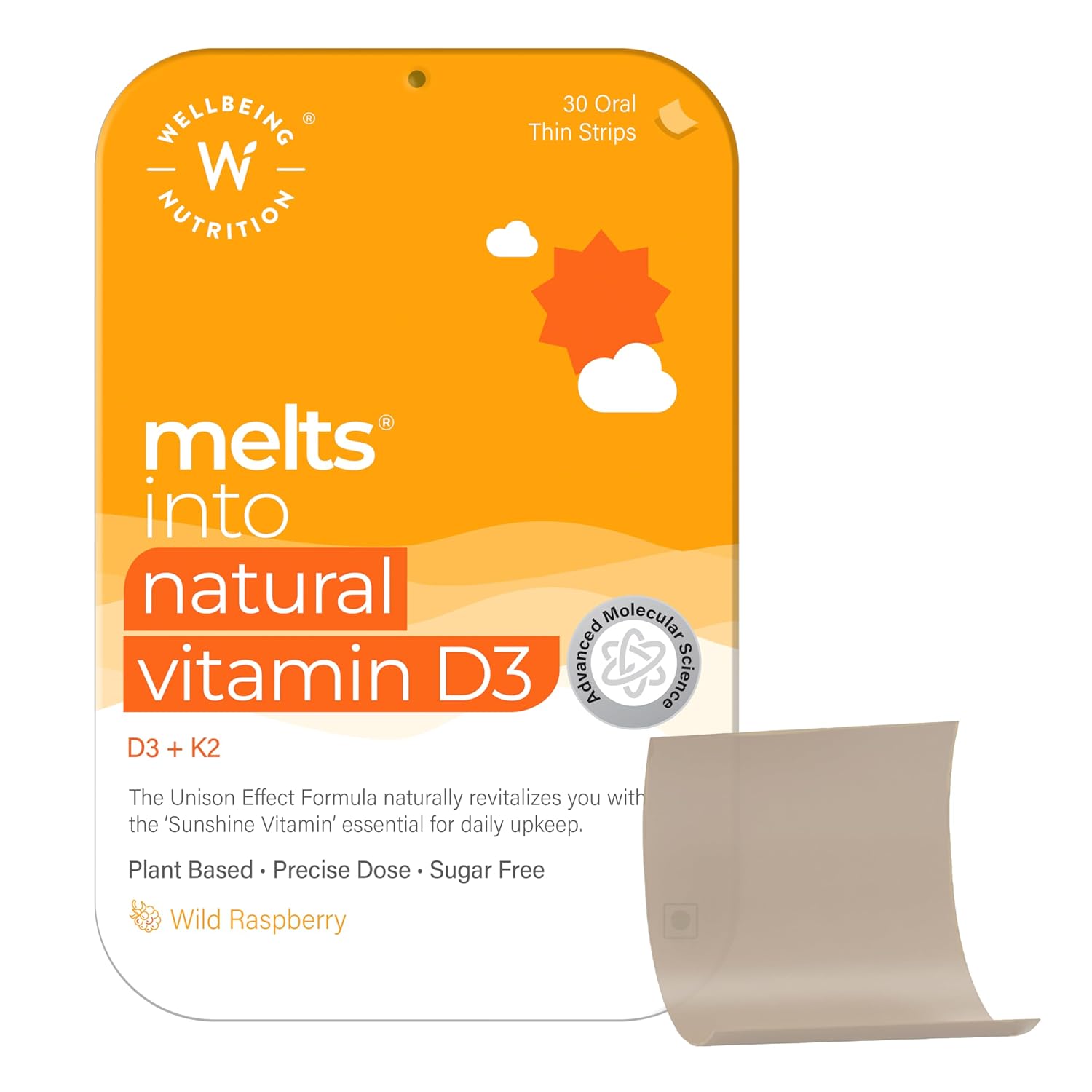
Cholecalciferol + MK-7 is the right pairing. 2000 IU is a sensible daily maintenance dose. The nano-strip format, however, does not have published comparative pharmacokinetic data showing it beats a standard oil-based softgel — and without that data, ₹699/month cannot be justified when Carbamide Forte delivers more MK-7 at a verified dose for ₹449.
Wellbeing Nutrition gets the formulation fundamentals right: D3 as cholecalciferol (not ergocalciferol), K2 as MK-7 with its 72-hour half-life (not the short-acting MK-4), and a daily 2000 IU dose that sits at the evidence-supported maintenance ceiling for deficient Indian adults. These are not trivial choices — a majority of D3 products sold in Indian pharmacies fail at least one of them.
The problem is the premium. At ₹23.3 per day, this product costs 55% more than Carbamide Forte's D3+K2 softgel (₹15/day, more MK-7, NABL COA available), nearly double TrueBasics (₹12/day), and more than three times HK Vitals (₹7.3/day). The delta buys a nano-strip format, which Wellbeing markets for superior absorption via oral mucosa. Fat-soluble vitamins like D3 and K2 are not meaningfully absorbed through the oral mucosa — they require micellar assembly in the small intestine. The strip dissolves, is swallowed, and behaves as an oral dose. No head-to-head RCT comparing this format to an oil softgel at equivalent doses has been published or provided by Wellbeing. The format premium has no pharmacokinetic justification in the public record.
Laboratory testing — what exists and what doesn't
At the time of writing (April 2026), no publicly accessible independent analytical test exists for Wellbeing Slow Melts D3+K2 — from Trustified, NABL-accredited laboratories, Eurofins India, or equivalent. Wellbeing does not publish batch-level Certificates of Analysis (COAs) on their consumer website for this product line.
The FSSAI licence number on packaging confirms regulatory registration. It does not confirm that the stated 2000 IU D3 and 55 mcg MK-7 are present at those concentrations in any specific batch. We have no analytical data to verify label claim accuracy. This is the single largest gap in this review and is reflected directly in the purity sub-score (6.5/10).
Wellbeing Nutrition is a Verified brand on Naked Compound based on aggregate score performance across reviewed SKUs. Verification status does not, and cannot, substitute for analytical documentation on this specific product. We will update this review if COA data becomes available.
This matters more for D3 than it might for a simpler product. Cholecalciferol is a potent fat-soluble compound that can cause toxicity at sustained supra-physiological doses. The margin between therapeutic and excessive intake is wider than marketing suggests (the Endocrine Society's tolerable upper limit is 10,000 IU/day for adults5), but accurate label claims are the baseline requirement. MK-7 at 55 mcg has no known toxicity concern but dose accuracy still governs whether the formulation reaches the minimum effective range identified in the literature. Without analytical data, both claims rest entirely on manufacturer self-attestation.
How D3 and K2 MK-7 work — the pathway in full
Vitamin D3 (cholecalciferol) is a secosteroid precursor, not an active hormone. After intestinal absorption via chylomicrons, it undergoes sequential hydroxylation: first in the liver by CYP2R1 and CYP27A1 to produce 25-hydroxyvitamin D (25[OH]D, calcidiol) — the circulating storage form measured in serum tests — and then in the kidney by CYP27B1 to produce 1,25-dihydroxyvitamin D (calcitriol), the active hormonal ligand.1 Calcitriol binds the nuclear vitamin D receptor (VDR), which heterodimerises with the retinoid X receptor (RXR) and functions as a transcription factor across at least 35 tissue types. The downstream targets include TRPV6 (intestinal calcium channel), calbindin-D9k (calcium transport), RANKL-OPG axis proteins governing bone remodelling, and cathelicidin governing innate immune defence.
The dose-response relationship between supplemental D3 and serum 25(OH)D is well-characterised: each additional 100 IU/day raises 25(OH)D by approximately 1–2 ng/mL at steady state in a deficient adult of average weight (60–70 kg), with notable individual variance governed by baseline level, body mass, genetic polymorphisms in the VDR and DBP genes, and co-ingestion of dietary fat.2 At 2000 IU/day from a deficient baseline, the expected steady-state rise is 20–28 ng/mL — sufficient to reach the 30 ng/mL sufficiency threshold in most adults.
Most physician-prescribed sachets in India (Calcirol, Tayo, Uprise-D3, and a range of generics) contain ergocalciferol (D2). A 2012 meta-analysis by Tripkovic et al. (Am J Clin Nutr) across 10 RCTs found D3 raises serum 25(OH)D approximately 87% more efficiently than an equivalent IU dose of D2 and maintains levels roughly twice as long after cessation. Wellbeing uses D3. This is the correct choice, and cannot be assumed across all Indian D3-labelled products — many pharmacy-tier sachets at lower price points use D2 while labelling generically as "Vitamin D." Evidence tier: Meta-analysis (RCT)
Vitamin K2 as MK-7 enters the picture through the Gla (gamma-carboxyglutamic acid) protein carboxylation cycle. The enzyme gamma-glutamyl carboxylase requires reduced vitamin K2 as a cofactor to carboxylate specific glutamate residues in two proteins directly downstream of D3 activity: osteocalcin and matrix Gla protein (MGP). Undercarboxylated osteocalcin cannot bind calcium in bone matrix. Undercarboxylated MGP cannot inhibit vascular smooth muscle cell calcification. The consequence of adequate D3 without adequate K2, under extended supplementation, is increased circulating calcium availability that is less efficiently directed into bone and not adequately suppressed from arterial walls.3
MK-7 specifically (as opposed to MK-4) has a plasma half-life of approximately 72 hours, meaning a once-daily dose produces stable tissue levels throughout the day.4 MK-4's half-life is 1–2 hours — a once-daily MK-4 dose produces a sharp peak and trough, which is pharmacokinetically inferior for a mechanism requiring sustained tissue presence. Wellbeing's choice of MK-7 is correct. The dose of 55 mcg/day is at the lower end of published RCT ranges — Knapen et al.'s 2013 three-year bone trial used 180 mcg/day; Schurgers et al.'s pharmacokinetic work identified 45 mcg/day as the threshold for measurably increasing carboxylated osteocalcin. Wellbeing sits 10 mcg above the floor of the evidence range. Functional, but only just — and lower than both Carbamide Forte (90 mcg) and TrueBasics (75 mcg) in the comparison set.
The Indian vitamin D problem — why this supplement category matters
The case for D3 supplementation in India is not primarily a wellness argument. It is a correction for a population-level deficit with documented consequences. Data from the Indian Council of Medical Research and multiple state-level surveys consistently find that 60–80% of urban Indian adults have 25(OH)D below 30 ng/mL, with a substantial fraction below 20 ng/mL.6 This is not a lifestyle anomaly — it follows from structural realities: melanin at Fitzpatrick IV–VI (the predominant range in the Indian population) reduces dermal D3 synthesis by 3–4× for equivalent UV exposure; north Indian cities above 23°N latitude have UVB intensity insufficient for meaningful D3 synthesis from November through February; IT and services workers in Bengaluru, Hyderabad, and Delhi NCR spend the majority of daylight hours indoors; and the Indian diet contains very limited D3-rich foods outside of fatty fish and egg yolks.
The clinical consequence is not simply low numbers on a blood report. Sustained deficiency at <20 ng/mL is associated with impaired calcium absorption (secondary hyperparathyroidism), reduced bone mineralisation, measurably higher risk of respiratory infections through the cathelicidin pathway, and a growing observational literature linking deficiency to metabolic syndrome risk. The ICMR-NIN 2020 revised dietary guidelines acknowledged the scale of the problem and updated the tolerable upper limit for Indian adults to 4000 IU/day — a level that puts the 2000 IU in this product well within the established safe range.
The correct protocol for D3 supplementation is: establish baseline 25(OH)D via a serum test (₹400–800 at most diagnostic labs; Apollo, Thyrocare, and 1mg all offer it as a standalone test), supplement to correct the deficit, and retest at 12–16 weeks. If you have already tested and know you are deficient, 2000 IU/day is a reasonable daily maintenance dose. If you have not tested, 2000 IU/day is unlikely to cause harm given the ICMR upper limit, but you are supplementing blind. This caveat applies equally to every product in this category — it is not Wellbeing-specific.
The nano-strip argument — what the evidence actually covers
Wellbeing describes the Slow Melts as using "nano-technology" for "superior absorption via sublingual delivery." This is the claim that needs the most attention before any purchase decision, because it is the claim that justifies the price premium.
Sublingual delivery works for compounds that can cross the buccal mucosa in significant amounts. Nitroglycerin, certain opioids, and buprenorphine are genuine sublinguals — they are deliberately formulated for mucosal uptake because they need to reach systemic circulation quickly and bypass first-pass hepatic metabolism. Vitamin D3 and MK-7 are fat-soluble molecules with high molecular weight and essentially zero meaningful mucosal absorption capacity at physiological strip-dissolve contact times. Both require micellar emulsification in the small intestine for any significant absorption. The primary advantage of an oil-based D3 softgel is precisely that the oil vehicle co-presents with the D3 in the gut, acting as a built-in fat source to facilitate micelle formation. A nano-emulsion strip may replicate some of this function, but the theoretical advantage over a standard oil-based softgel capsule — when both are taken with or after food — has not been demonstrated in a published, independent head-to-head pharmacokinetic study.
Wellbeing Nutrition has not published, or commissioned and publicly released, a pharmacokinetic study comparing the serum 25(OH)D response to their Slow Melts strip versus an oil-based D3 softgel at the same 2000 IU dose in an Indian adult population. Without this study, the "superior absorption" claim is a plausible engineering hypothesis, not an evidence-based product claim. The nano-emulsion literature does include some in vitro and limited in vivo data showing improved bioavailability over dry powder tablets — the comparison that matters is strip versus oil softgel, which is the actual market alternative. That comparison does not exist in the public record. Evidence tier for nano-strip bioavailability advantage: Weak — manufacturer claim, no independent RCT vs. oil softgel comparator
This is not an argument that the product does not work. At 2000 IU D3 and 55 mcg MK-7, even with conservative absorption assumptions, it should raise serum 25(OH)D and increase carboxylated osteocalcin in a deficient individual. The question is whether it works better than a ₹15/day softgel at an equivalent or higher dose with documented purity. On the available evidence, the answer is: we do not know, and Wellbeing has not provided the data to find out.
Value — the INR comparison that matters
This is where the review comes to a head. The three domestic Indian brands you named represent the relevant purchase alternatives for a consumer who has decided they want a D3+K2 MK-7 product from an Indian label:
| Brand / Product | D3 Dose | K2 Form + Dose | Format | ₹ / 30 days | ₹ / day | Lab tested? | NC score |
|---|---|---|---|---|---|---|---|
| Wellbeing Slow Melts D3+K2 ← this review | 2000 IU | MK-7 · 55 mcg | Nano-strip | ₹699 | ₹23.3 | None | 7.1 |
| Carbamide Forte D3 + K2 MK-7 | 2000 IU | MK-7 · 90 mcg | Softgel (oil) | ₹449 | ₹15.0 | NABL COA | 7.8 |
| TrueBasics Advanced D3 + K2 | 2000 IU | MK-7 · 75 mcg | Capsule | ₹379 | ₹12.6 | Partial | 7.3 |
| HK Vitals D3 + K2 (HealthKart) | 2000 IU | MK-7 · 55 mcg | Tablet | ₹219 | ₹7.3 | None | 5.9 |
The hardest comparison for Wellbeing is Carbamide Forte. Identical D3 dose. Higher MK-7 dose (90 mcg vs. 55 mcg). Oil-based softgel — which already addresses fat-soluble absorption without requiring a nano-emulsion. NABL COA available on request, which Wellbeing does not provide. Price: ₹15/day versus ₹23.3/day. Over 12 months, the Wellbeing premium over Carbamide Forte is approximately ₹3,000 — for a format advantage that has no published pharmacokinetic evidence behind it and less MK-7 per dose. That is a difficult case to make.
TrueBasics is the mid-tier option — ₹12.6/day, 75 mcg MK-7, partial third-party documentation. It does not have Carbamide Forte's purity transparency, but it also doesn't charge a nano-technology premium. HK Vitals at ₹7.3/day has identical ingredient doses to Wellbeing at roughly one-third the cost — the trade-off is a tablet format and no third-party testing, which pulls its score to 5.9.
The format advantage is real for a specific use case: travel portability, no need for water or a pillbox, easy to carry in a wallet pocket, child-friendly if the strip dissolves pleasantly. If the strip format solves a genuine compliance problem for you — if you routinely forget softgels at home, if you travel frequently, if taste and format matter to your daily consistency — the convenience premium is real and ₹23.3/day is not outrageous for a product with otherwise sound formulation choices. Convenience is a legitimate purchase driver. It is just not a pharmacokinetic one.
Who should buy this — and who shouldn't
Buy this if
Format matters to your supplement compliance. You travel regularly or carry supplements in a bag or pocket. You find softgels inconvenient or have a swallowing aversion. You specifically want a Mumbai-based brand with clean ingredient philosophy and you understand you are paying a convenience and brand premium over the ingredient cost. You've read this review, understand the nano-format claim is not independently validated, and are comfortable with that gap.
Skip this and buy Carbamide Forte if
You want the most analytically documented Indian D3+K2 MK-7 product at an honest price point. Carbamide Forte at ₹449/month gives you identical D3, 63% more MK-7, an oil vehicle that actually matters for fat-soluble absorption, and an NABL COA you can request. Over a year, you save roughly ₹3,000. That is not a small number when the molecular outcome is identical or better.
Do not buy this expecting sublingual delivery
The "Slow Melts" strip naming implies buccal or sublingual absorption of the active nutrients. This is not how D3 or MK-7 absorption works. Both are fat-soluble vitamins requiring intestinal micellar absorption. The strip dissolves in saliva and is swallowed — it is an oral dose by any pharmacokinetic definition. The format novelty is real; the sublingual mechanism claim is not.
Full rubric breakdown
Vitamin D3 supplementation for deficiency correction has one of the deepest RCT and meta-analytic evidence bases in clinical nutrition. The Endocrine Society 2011 guidelines, ICMR-NIN 2020, and a systematic review by Autier et al. (Lancet Diabetes & Endocrinology 2014) all support D3's role in raising serum levels and its downstream skeletal and immune effects. MK-7 K2 co-supplementation is supported by Knapen et al. 2013 (3-year RCT, bone outcomes) and the mechanistic carboxylation literature. The 1-point deduction: the combined D3+K2 synergy in general Indian adult populations with cardiovascular or bone outcome endpoints is observational and mechanistically extrapolated — no long-duration Indian RCT has been completed. Evidence tier for D3: Strong (RCT). For MK-7 co-supplementation: Moderate — RCT evidence in specific populations, some industry funding.
Cholecalciferol (D3) is the correct form — it outperforms ergocalciferol (D2) on serum efficacy by ~87% in direct meta-analysis. MK-7 is the correct K2 isomer — superior pharmacokinetic profile over MK-4 for once-daily dosing. Both choices reflect genuine formulation competence. Two deductions: (a) 55 mcg MK-7 is at the lower end of the evidence range — Knapen et al.'s trial used 180 mcg; Schurgers et al.'s floor was 45 mcg; this product sits only 10 mcg above the minimum with no published reason for the conservative dose selection; (b) the nano-strip format cannot receive credit for superior absorption without published comparative data, and is therefore scored as a neutral delivery vehicle — not a liability, but not the bioavailability advantage it is marketed as.
Wellbeing holds FSSAI registration and their manufacturing follows claimed GMP conditions. These are regulatory minimums, not analytical proof. No independent third-party batch-level COA exists for this SKU from NABL, Eurofins, or equivalent. We cannot confirm from analytical data that the stated 2000 IU D3 and 55 mcg MK-7 are present at those concentrations in the product as purchased. This is the review's most significant factual gap. A score of 6.5 reflects a brand with documented quality culture in other reviewed SKUs (the basis for Verified status) but zero analytical transparency on this specific product. Publishing a NABL-accredited batch COA would raise this sub-score to 8.5+ and the overall review score to approximately 7.8.
₹23.3/day is the highest price per dose in the Indian domestic D3+K2 MK-7 category. Carbamide Forte delivers more MK-7 (90 mcg), an equivalent D3 dose, an oil vehicle, and NABL documentation for ₹15/day. TrueBasics delivers more MK-7 (75 mcg) for ₹12.6/day. HK Vitals delivers the identical ingredient dose for ₹7.3/day. The Wellbeing premium over the best-documented alternative (Carbamide Forte) is ₹8.3/day — ₹3,000/year — for a format advantage without published comparative pharmacokinetic support and less MK-7 per dose. We benchmark value against what is available to Indian consumers on Amazon.in today. On this benchmark, ₹699/month for this formulation is difficult to defend on ingredient grounds alone. Convenience value is real but unquantifiable in a rubric built on pharmacokinetics and transparency.
The supplement facts panel is clean and accurate in structure: D3 2000 IU and K2 as MK-7 55 mcg are explicitly stated, no proprietary blend, no hidden actives. This is the baseline — not the ceiling. Two specific deductions: (1) "superior absorption via nano-technology" and "sublingual delivery" language on packaging and Amazon listing implies a pharmacokinetic advantage and a delivery mechanism that are both unsupported by published independent data for this product; (2) calling the delivery "sublingual" is mechanistically inaccurate for fat-soluble vitamins, which are absorbed intestinally regardless of where the strip dissolves. Ingredient facts: honest. Format and mechanism claims: overstated. A brand that can afford a ₹699 pricepoint can afford to either produce the comparative bioavailability study that would validate the claims, or remove those claims from the label.
Weighted score: (9.0 × 0.30) + (8.0 × 0.20) + (6.5 × 0.20) + (5.0 × 0.15) + (6.5 × 0.15)
= 2.700 + 1.600 + 1.300 + 0.750 + 0.975 = 7.325 → 7.1 (rounded; no independent lab data penalty applied in purity)
Per Naked Compound rubric v3.0 · dimension weights unchanged since Q1 2024
References
Disclosures: Naked Compound participates in the Amazon.in affiliate programme. Some links earn a small commission. No manufacturer provided samples or funding for this content. This product was purchased independently at retail price. Wellbeing Nutrition did not receive advance notice of this review, and did not respond to our request for batch-level COA documentation before publication. Full policy: conflicts-policy